Medical animation is animated video built to explain anatomy, conditions, procedures, devices, or drug mechanisms accurately enough that a clinician, patient, or regulator can rely on it. What separates it from ordinary explainer animation is not the visual style but the review process behind every frame.
Below you will find what medical animation is used for, 10 examples across training, patient education, devices, and compliance, what it costs, how to choose between 2D and 3D, and the seven things to settle before you commission one.
What Makes an Animation “Medical”
Any studio can draw a heart. A medical animation studio has to draw the right heart, beating at a plausible rate, with the chambers filling in the correct order, and then have someone qualified sign off that it does. That sign-off is the actual product.
Three requirements separate medical animation from a standard explainer video:
- Clinical accuracy under review. Anatomy, physiology, and procedural sequence are validated by a subject-matter expert before animation begins, not after.
- Controlled simplification. Every medical explanation leaves something out. The skill is choosing omissions that make the concept clearer without making it wrong.
- Audience-calibrated language. The same mechanism has to be told one way to a surgeon and a completely different way to a frightened patient, without either version contradicting the other.
Get those three right and the format works across the whole sector. That is why medical and healthcare animation services sit across patient education, clinician training, device explanation, and public health at the same time.
3 Reasons Why You Should Use Medical Animation
Medical animation uses visual storytelling to represent medical and healthcare concepts. It is widely used in three contexts: patient education, healthcare professional training, and marketing campaigns.
1. Promote patient communication
A consultation gives a patient a few minutes to absorb a diagnosis while their working memory is already loaded with anxiety. Very little survives the walk to the car park. An animation can be watched again at home, paused, and shown to a family member who was not in the room.
It also travels across language. A visual explanation of what a stent does works for a patient whose first language is not the one your leaflet is printed in, which is why patient education animation is often the cheapest accessibility improvement a clinic can make.
2. Support healthcare professional training
Textbooks are good at storing knowledge and poor at showing sequence. A drug interaction, a surgical approach, or a physiological cascade all unfold over time, and a static diagram forces the learner to reconstruct that timing in their head. Animation supplies it directly, which is why it works well for procedural content and badly for pure recall.
3. Facilitate marketing and promotion
Medical products are usually bought on mechanism, not on features. A device that reduces recovery time is difficult to argue for in a brochure and immediate to grasp when the mechanism is shown. The same asset then serves sales meetings, conference stands, investor decks, and the product page.
That reuse is where the budget usually justifies itself: one accurate mechanism animation tends to outlive three campaign videos built around messaging that changes.
How Much Does Medical Animation Cost?
Medical animation cost varies based on whether you hire a studio or a freelancer. Healthcare animation companies charge up to $50,000 per minute at the top of the market, depending on style, project complexity, and duration.
Conversely, freelancers on platforms like Fiverr may offer animations ranging from $200 to $3,000 for 60 seconds. The saving is real, but so is the trade-off: no cohesive team, limited revisions, and no clinical review step, which on medical content is the part you can least afford to skip.
At F. Learning Studio, custom medical animation is priced for organisations that need accuracy without a Western agency rate card. We offer a 30% budget savings compared to US-based medical animation companies. The saving comes from where the studio is based, not from cutting the review process.
Want a figure for your own project instead of a range?
Enter your runtime, style, character count and number of languages, and see where a medical animation of your scope actually lands.
Open the animation cost calculator Takes about two minutes. No email required to see the estimate.Types of Medical Animation with 10 Examples
The ten below cover the range of what medical animation is commissioned for. Each one names the technique used and who it is built for, so you can find the closest match to your own brief.
1. Medical Animation Videos for Training
- Type: 2D medical animation
- Description: The animation provides a guide on how to apply medication and how to retain information about Blood Thinners.
- Purpose: Used for training courses to educate healthcare professionals about medicine.
- Best for: Drug protocols and administration steps, where the sequence matters more than the anatomy. This is core healthcare professional education territory.
2. Healthcare Animation Video for Patient Education
- Type: 2D animation
- Description: This video explains the concept of heart failure, its underlying causes, and the key symptoms to be aware of.
- Purpose: Educate patients about a chronic condition.
- Best for: Long-term conditions a patient has to self-manage. Note the pacing: one symptom is shown, named, and closed before the next appears, because anxiety reduces how much a viewer can hold at once.
3. Medical Animated Video for Professional Education
- Type: 3D medical animation
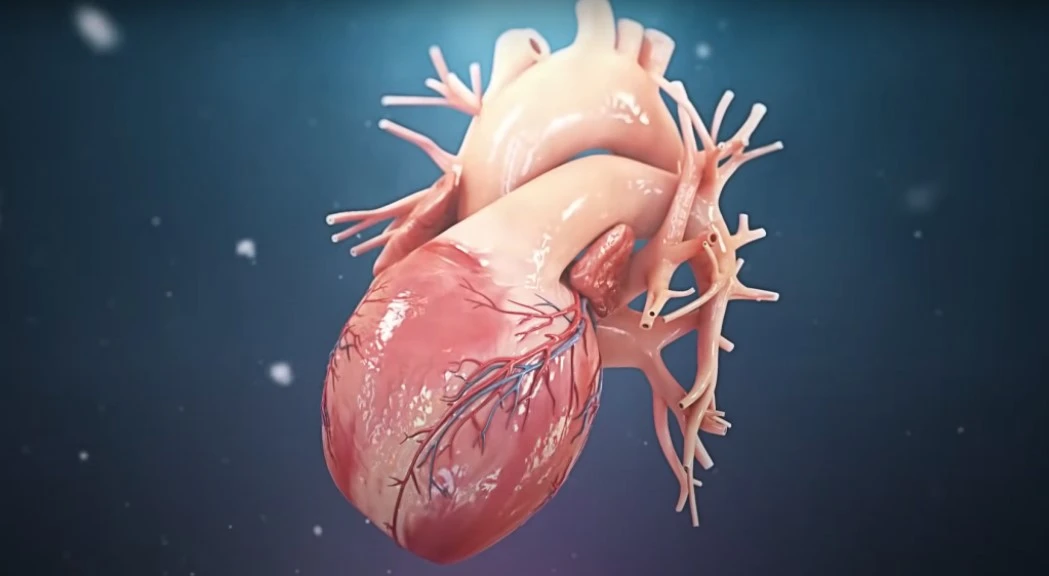
- Description: This 3D animation shows every detail of the heart’s anatomy, from the pumping action to the flow of oxygen-rich blood.
- Purpose: Support healthcare professionals when learning about anatomy
- Best for: Spatial relationships. When the learner has to understand what sits behind what, 3D earns its higher cost; for a flowchart of a care pathway it does not.
4. Medical Device Animation Video
- Type: 3D animation
- Description: Designed for those managing diabetes, the video below shows a clear, visual explanation of how an insulin pump works.
- Purpose: Provide a solution for patients and users to understand a medical device: how it’s implanted, how it works, and what to expect.
- Best for: Anything with an internal mechanism a user never sees. A medical device and pharma product explainer usually has to serve patients, clinicians, and sales from one asset, so plan the versioning before production.
5. Medical Animation for Public Health Campaign
- Type: 2D animation
- Description: This 2D animation visually explains why and how people panicked during the Covid-19 pandemic. Plus, it provides solutions to protect mental health.
- Purpose: Raise awareness, educate, and promote positive health behaviors within communities.
- Best for: Audiences who did not choose to watch. Public awareness and education campaigns have a harder job than clinical training, because the first fifteen seconds have to earn the rest.
Half way through the ten. If you would rather look at finished work than descriptions, browse our healthcare and medical projects for NYU Langone Health, Stanford Medicine Children’s Health and Evelina London.
6. Medical Marketing Animation
- Type: 2D animation
- Description: The video shows how a healthcare service provides care for patients with chronic health conditions.
- Purpose: Used to promote medical services to a target audience.
- Best for: Service lines that are hard to differentiate on paper. Keep the clinical claims minimal here, because marketing assets usually face the strictest review.
7. Regulatory Compliance Medical Animated Videos
- Type: 2D animation
- Description: This video provides an overview of clinical trials. It explains how they work and why they are important for patients with conditions like pancreatic cancer.
- Purpose: Explain complex regulatory requirements clearly and concisely.
- Best for: Consent, protocol, and safety content where a rule is easy to state and hard to apply. This is the same design problem as clinical safety and compliance training: the moment a rule becomes a picture of a consequence, it stops being paperwork.
8. Anatomy and Physiology Medical Animation
- Type: 3D animation
- Description: The video explores the functions of the nervous system and its 2 main parts: the central nervous system and the peripheral nervous system.
- Purpose: Used for educational purposes, this type of animation illustrates the structures and functions of the human body.
- Best for: Curriculum content that will be reused for years. Model and rig once, then reuse across a whole module library, which is where the per-minute cost drops sharply.
Read more: 9 Best 3D Medical Animation Companies for Engaging Content
9. Surgical Procedure Animated Videos
- Type: 3D animation
- Description: This 3D medical animation visualizes a brain surgery called a craniectomy. This is performed to decrease intracranial pressure (ICP), intracranial hypertension (ICHT), or heavy bleeding inside a skull.
- Purpose: Depict surgical techniques and procedures, supporting doctors when preparing for surgery.
- Best for: Procedures too rare or too invasive to film. Animation also lets you show the approach from an angle no camera could occupy, which is often the whole point.
Read more: Medical Procedure Animation: A Thorough Guide with 4 Examples
10. Pharmacology Animation
- Type: 2D animation
- Description: This 2D animated video explains medications used to treat migraines and their side effects.
- Purpose: Educate healthcare professionals, patients, and the general public about the mechanisms of action, effects, and interactions of drugs within the body.
- Best for: Mechanism of action, where the process happens at a scale nobody can observe. Expect the longest review cycle of any type here, because side-effect wording carries legal weight.
Read more: Top 8 Best Medical Animation Software [Free & Paid]
2D or 3D: Which One Your Project Actually Needs
Half the examples above are 2D and half are 3D, and the choice is not about budget first. It is about whether the thing you are explaining has meaningful geometry.
| Choose | When the subject is | Typical use | Watch out for |
| 2D medical animation | A process, a pathway, a protocol, or a decision sequence | Patient education, drug protocols, consent, compliance, campaigns | Over-simplified anatomy that a clinician will reject on review |
| 3D medical animation | A structure, a device, or a spatial relationship | Surgery, anatomy, device mechanism, mechanism of action | Photoreal detail that raises cost without improving comprehension |
| Both, in one asset | A device used inside a wider care pathway | Device launches, medtech sales, clinician onboarding | Style clash between the two, if not art-directed as one system |
The common mistake is buying 3D for prestige on content that is fundamentally a flowchart. The opposite mistake is cheaper but worse: forcing 2D onto a device explanation, then adding labels and arrows to compensate for the geometry you removed.
7 Things To Settle Before You Commission a Medical Animation
Most medical animation projects that overrun do so for reasons decided before production started. These are the seven worth settling in writing.
1. Scientific Accuracy
Accuracy is the whole product. Presenting information incorrectly loses trust faster than any production value can win it back, so anatomy, physiology, and procedural order have to be validated by a qualified expert working alongside the animators and illustrators. The practical question is not whether accuracy matters but who specifically signs it off, and at which stage. Storyboard is the answer; anything later is expensive.

2. Regulatory and MLR Review
This is the step most first-time buyers forget, and it is the one that moves timelines the most. If the animation carries a product claim, mentions an indication, or shows a device in use, it will need medical, legal, and regulatory review (MLR) before release, and reviewers comment on narration wording as readily as on visuals.
Two things make this survivable: get the script through review before storyboard, and agree in advance who holds the pen when a reviewer’s wording will not fit the animation timing. Projects that skip both routinely spend longer in review than in production.
3. Accessibility and Inclusivity
Make sure your medical animation is usable by a diverse audience, including those with disabilities. Captions for the hearing impaired, plain-language narration for viewers unfamiliar with clinical vocabulary, and adequate colour contrast are the baseline, not extras.
Representation matters clinically as well as ethically: showing a symptom only on light skin makes the animation less useful to a large part of its audience. Decide on your range of skin tones, body types, and care settings at concept-art stage, when changing them is free.

4. Restrictions on Time and Finance
Medical animation is time-consuming and costly, so concentrate the budget on the segments that carry the teaching and simplify the rest. Pre-existing assets, a simpler animation style for connective scenes, or partnering with a trusted healthcare animation company all reduce the number without reducing the accuracy. Set realistic deadlines, and build the review rounds into the schedule rather than assuming they will happen between milestones.
5. Ethical and Privacy Considerations
Medical animations must adhere to ethical principles and protect patient privacy. If your animation draws on patient stories or data, anonymise it, and check whether your source material falls under HIPAA, GDPR, or your local equivalent before it reaches a studio. Content involving mental health or terminal illness needs a further pass on tone: accurate and distressing is still a failure if the viewer stops watching.

6. The Change in Educational Requirements
Guidelines change, and an animation that was accurate at launch can quietly become wrong. Build for revision: keep the source files, keep narration in short modular segments, and separate the parts likely to date (dosages, guideline references, device generations) from the parts that will not (anatomy, mechanism). A five-year asset costs slightly more to build and far less to maintain.
7. Target Audiences
Name one primary audience per video. A single animation that tries to satisfy a surgeon and a newly diagnosed patient simultaneously will underserve both: the surgeon finds it slow, the patient finds it frightening. Decide the medium too, since a clip for social needs to make its point in the first few seconds, while an LMS module can take its time.

Why F.Learning Studio is a Good Choice for Medical Animation?
1. Cost-effective but High-quality Medical Videos
By choosing us, you can save 30% of your budget compared to US-based medical animation companies, without compromising on excellence. That gap comes from where the studio is based, not from a thinner process: the clinical review, the concept art, and the revision rounds are the same.
We work closely with you to scope a custom animation solution around your budget, concentrating spend on the segments that carry the teaching. Our production process sets out who signs off at each stage, including where your clinical reviewer sits in the schedule.
2. Producing Medical Animation Since 2016
F. Learning Studio has been producing 2D and 3D medical animation since 2016 for hospitals, medtech companies, and healthcare educators, including NYU Langone Health, Stanford Medicine Children’s Health, Evelina London Children’s Healthcare, and the NHS. The studio holds a 5.0 rating on Clutch.
A decade of medical projects buys something specific: a process that already assumes a clinical reviewer, an MLR cycle, and late guideline changes, rather than treating each as an exception.

3. Our Expertise Covers a Wide Range of Medical Animation
Our medical animation work spans surgical procedures, nurse training, mental health, pharmaceutical mechanism of action, and device explanation. That breadth matters when a single asset has to serve several audiences, because the version for clinicians and the version for patients are built from one accurate model rather than two separate briefs that can drift apart.
Where to Start
Medical animation earns its cost wherever a concept is invisible, a procedure is hard to describe, or a rule is easy to misapply. If you have a topic in mind, the fastest way to find out whether animation is the right format is to talk it through with someone who has produced it under clinical review before.
Have a procedure, condition, or device that keeps getting misunderstood?
Bring the topic, the audience, and who your clinical reviewer will be. In 30 minutes we will tell you whether 2D or 3D fits, roughly what it would take, and where the review cycle needs to sit in your timeline. If you would rather see it than discuss it, we will animate a short sample of your own subject first.
Producing medical animation since 2016 · 5.0 rating on Clutch · Trusted by NYU Langone Health, Stanford Medicine Children’s Health and Evelina London
- Email: [email protected]
- Fanpage: https://www.facebook.com/f.learningstudio
- LinkedIn: https://www.linkedin.com/company/f-learning-studio/
FAQs About Medical Animation
What is medical animation?
Medical animation is animated video built to explain anatomy, conditions, procedures, devices, or drug mechanisms accurately enough that a clinician, patient, or regulator can rely on it. What separates it from ordinary explainer animation is the clinical review process behind every frame, not the visual style.
Should I choose 2D or 3D medical animation?
Choose 2D when the subject is a process, pathway, protocol, or decision sequence, which covers most patient education, drug protocols, consent, and compliance content. Choose 3D when the subject is a structure, a device, or a spatial relationship, such as surgery, anatomy, or mechanism of action. The deciding question is whether the thing you are explaining has meaningful geometry.
How much does medical animation cost?
Healthcare animation companies charge up to $50,000 per minute at the top of the market, while freelancers on platforms like Fiverr may quote $200 to $3,000 for 60 seconds. Price is driven by style, complexity, runtime, and the number of custom assets. The freelance tier usually excludes the clinical review step, which is the part medical content can least afford to lose.
Who checks that a medical animation is clinically accurate?
A qualified subject-matter expert, working alongside the animators and illustrators, validates anatomy, physiology, and procedural sequence. The important detail is timing: sign-off should happen at script and storyboard stage. Corrections requested after animation has started are paid for twice, once to make the original and once to remake it.
Does a medical animation need regulatory or MLR review?
If it carries a product claim, mentions an indication, or shows a device in use, it will need medical, legal, and regulatory review before release. Reviewers comment on narration wording as readily as on visuals, so send the script through review before storyboard and agree in advance who resolves conflicts between a reviewer’s wording and the animation timing.
Where can medical animations be used?
Patient education in clinics and on discharge, clinician and nurse training, medical device and pharma product explanation, clinical trial and consent communication, public health campaigns, conference and investor presentations, and university curricula. One accurate mechanism animation can usually serve several of these with changes to narration and framing rather than a rebuild.
Read more:
- Medical Device Animation: A Detailed Guide with 4 Examples
- Medical Technology Animation: A Guide with 5 Examples
- 10 Medical Animation Examples to Inspire Your Next Project

Sean Bui, the founder and creative director of F. Learning Studio, is a respected leader in the e-learning and multimedia production industry.
With over 10 years of experience, he has dedicated his career to helping organizations create engaging and impactful learning experiences. Under his leadership, F.Learning Studio has grown into a trusted partner for organizations in the education, healthcare, and corporate training sectors, producing over 2,000 minutes of educational animation.
Sean’s expertise in translating complex concepts into compelling animated videos and interactive learning experiences, as well as his active involvement in the e-learning community, have earned him a reputation as a trusted partner and thought leader in the field of educational technology.